Why Complexity Needs a Translator in High-Growth Companies

High-growth companies often underestimate how hard it is for people to understand them. They sit close to their own products, surrounded by colleagues who all speak the same technical shorthand, and assume the rest of the world can keep up.

I have worked with energy technology companies, cybersecurity firms, international data networks and delayered NaaS and SaaS operators. The pattern is the same. Product managers and operations teams use acronyms and technical depth as a badge of honour. It signals innovation. It signals intelligence. But in communications it creates distance.

Most stakeholders cannot follow the detail, so the message slips and the value slips with it. This is where the role of a translator matters. Not to dilute the idea, but to interpret the internal language that comes so naturally to executives and turn it into something that customers, investors and partners can act on. It is a commercial function, not a creative indulgence.

Complex businesses are often proud of their complexity because it reflects their expertise. They believe it hints at intellectual weight. In practice, it causes disengagement. Investors switch off. Buyers hesitate. Teams lose the thread. Even great ideas are hard to find if they’re buried under layers of process and engineering.

Clarity is hard work and difficult. It forces teams to decide what the idea really is. When a narrative collapses under its own volume of detail, the issue is rarely the audience, it’s usually a lack of clarity and structure.

Internal language that outsiders can’t understand, long lists of features, and attempts to land a message through sheer density of information don’t work. I’ve heard it called the “thud factor”, as if weight alone creates impact. It never does.

Most corporate narratives only need three things.
1. What we are doing.
2. Why it matters.
3. How we can prove it.

Once this spine is in place, the rest of the detail can sit behind it for anyone who wants more. Most people never do.

Translation also strengthens internal alignment. If ten people cannot tell the same story, the strategy has structural cracks. They show up in meetings, in sales conversations, in hiring discussions and in investor decks. These inconsistencies erode confidence and slow momentum.

Organisations that handle complexity well make it look simple. They remove friction. They lead with outcomes before mechanisms. They use examples that feel relatable. They speak plainly without reducing the substance. They understand that clarity reduces risk.

If you cannot make the idea simple, someone else will. Possibly a competitor.

Complexity has value, but only when people know what to do with it. A translator makes that possible by revealing the idea, not the machinery behind it.

Why Complexity Needs a Translator in High-Growth Companies - Expect unfiltered ideas formed without corporate oversight or focus groups, so they are personal and proudly imperfect.

Cognitive Drift Into "The StupID Zone"

How media, distraction and cognitive drift reshape national judgement and whether we can still put the pieces back together.

Introduction - A few years ago I met Adam Robinson at a conference in London. He was presenting one of the most interesting talks I have ever heard on how people make mistakes and why intelligent people are not immune. The argument stayed with me because it was simple, practical and uncomfortably accurate.

For decades I have been drawn to the work of Neil Postman. His idea that media reshapes society rather than society shaping media becomes more accurate with each passing year. Postman knew that attention is a cultural asset and explained why once it is lost the quality of public thought declines with it.

I think that Putting Robinson and Postman together (has anyone else ever done this?) creates a useful frame for understanding the world we now live in. It explains why bad decisions rise even when information is abundant and it helps clarify why the concept of stupidity is not about intelligence at all but about the environment we have built around ourselves.

Neil Postman argued that when a society’s media changes, its habits of thought change with it. Print taught us to follow a line of reasoning. Television trained us to react to images. The internet pushed us to skim. Social media pushed us to perform. In Technopoly: The Surrender of Culture to Technology (1992) he went further and was way ahead of his time when he said that we risk becoming a culture in which technology dictates meaning, values and thought, rather than the other way around.

Combined with Robinson and Cipolla, Postman explains how the cognitive environment is structured to keep people in the stupid zone where we outsource parts of our judgement to AI systems we barely understand.

Postman’s point was simple.

  • When media changes the form of public discourse also changes.

  • When discourse becomes dominated by entertainment, inevitably depth and rational debate weaken.

  • When rational debate weakens democratic decision-making becomes thinner, more emotional and less capable of handling complexity.

  • This produces the cultural drift we find ourselves in now.

We know that social media do not just carry information, they shape our attention. They influence what counts as knowledge and they define what it means to think like an adult. When habits like patience, focus and proportion are edged out by constant stimulation, the quality of public thought declines. Postman argue’s that over time, that weakens a society’s ability to deal with its own problems.

We saw a version of this during the early days of COVID. People behaved in ways that made little sense on paper. Panic buying. Rumours spreading. Vaccine hesitancy and denial rising. None of it was caused by stupidity in the usual sense. It came from an environment that pushed attention to breaking point. Stress, overload and the emotional echo chamber of online life encouraged decisions that felt urgent but lacked context.

Adam Robinson’s work helps explain this. He says stupidity is not low intelligence, it’s what happens when attention collapses under pressure. Noise, novelty, fatigue and group signals shrink your field of view. Even smart people make bad calls when the world keeps them in that state. Modern media almost guarantees it. We compress everything into a crisis. We distort risk. We reward reaction over reflection. His point is that the environment produces mistakes long before the individual does.

Carlo Cipolla takes this further. He believed societies suffer most when behaviour harms both the actor and everyone around them. No malice, just poor judgement amplified by momentum. You see this in how misinformation spreads or how fear escalates online. The issue isn’t that people don’t understand the warnings, it’s that they’re too distracted and wound up to take them in. When everyone is rushing and reacting, small mistakes build into bigger ones because no one stops long enough to fix them.

Can this cognitive drift be reversed? Postman was sceptical. Once attention habits collapse, rebuilding them is hard. He feared that societies which amuse themselves to death cannot easily relearn adult thinking. Robinson is more conditional. He says that if we understand the triggers for bad decisions, we can design environments that protect bandwidth and slow thinking down. Cipolla argued that systems can survive irrationality if they recognise its power and build guardrails.

There is also a quieter argument in favour of optimism. Despite the noise, digital tools can extend our capabilities when used with intent. Scientists used global data sharing to track the COVID virus at record speed. Online communities support people who once felt isolated and information and knowledge is more accessible to the curious helping us become more capable, not less. The potential is there if we design a digital world that helps us think and is not diesigned to distract and amuse us.

So what would it take to escape the stupid zone? No society willingly slows itself down. No commercial platform volunteers to make less money. No government chooses to reduce the speed of information unless forced by crisis. That is why the list feels implausible. It asks the current system to act against its own incentives.

  1. Real progress comes from smaller moves that build over time and education is the quickest route. Schools, universities and professional training can shift the balance from teaching pure digital fluency to teaching attention, scepticism and judgement. These are practical skills and politically neutral.

  2. Social media platforms tend to change only when reputational pressure, regulation and public mood line up. We saw it with child protection, privacy rules and advertising transparency. Similar nudges could raise the cost of promoting noise over quality without demanding the impossible from the businesses behind them.

  3. Institutions can also adopt simple circuit breakers. Public health agencies now treat misinformation as part of crisis management. Financial regulators use automatic trading pauses to stop panic spreading. These tools do not solve the whole problem, but they stop small fires becoming national ones.

None of this rewrites the incentives of the digital world, but it does chip away at the conditions that keep people distracted, overloaded and reactive. It is slow work and rarely visible, yet it is how cultures shift back to the norm. We shouldn’t expect perfection butew must demand steady pressure and much better guardrails.

The choice is not between a flawless system and collapse, it’s between doing nothing and doing enough to keep national judgement intact.

We are not doomed, but drift has a direction and it is not upwards. The first step is to recognise the environment that shapes our mistakes. The next is to reclaim the attention needed for clear, adult judgement which is when we can start putting the pieces back together.

Final thought - “Avoiding stupidity might be better than being smart.” Charlie Munger of Berkshire Hathaway

Cognitive Drift Into "The StupID Zone" - Expect unfiltered ideas formed without corporate oversight or focus groups, so they are personal and proudly imperfect.

When Growth Speaks Clearly, It’s Worth More

Growth no longer speaks for itself. Numbers might prove performance, but they rarely earn belief on their own. In today’s market, it’s the clarity and confidence with which growth is communicated that determines whether a company is recognised, trusted, and ultimately valued at a premium.

We’ve reached a point where storytelling has become part of governance. A company’s narrative is now inseparable from its numbers. Investors and markets want to understand not only what the business has achieved, but why it matters and where it’s going next. When that story is told with clarity, it can add measurable value to the bottom line. The data proves it

Three major studies show how a well-constructed corporate narrative influences valuation:

  • EY’s Global Capital Confidence Barometer (2024) found that companies able to articulate a clear and consistent narrative are 20% more likely to complete successful deals or acquisitions.

  • Bain & Company (2024) reported that 70% of investors rate “story quality” as a critical factor in determining whether a business is ready for an exit or investment.

  • Accenture Song (2023) discovered that brands aligning communication strategy with business design deliver 2.3× higher shareholder returns over a five-year period.

The lesson is simple: clarity compounds value.

A well-told story turns data into understanding and understanding into belief and belief/trust is what investors pay for.

The multiplier effect of meaning

Financial performance creates value. Communication converts that value into belief.

When a company’s numbers are supported by a strong narrative, they gain what I call a valuation multiplier. That multiplier comes from trust, coherence, and direction. It reassures investors that the growth isn’t accidental, but intentional and repeatable.

Think of it like this:

  1. The numbers show what you’ve done.

  2. The narrative shows why it matters.

  3. The clarity shows where it’s heading next.

  4. That combination builds confidence — the true currency of modern markets.

A clear, confident narrative helps a business control its own story rather than leaving the market to interpret the numbers for itself. It creates a connection between what the company is doing and what stakeholders believe it can achieve.

Why this matters now

The information age has created a paradox: more data, less understanding. Quarterly updates, performance dashboards, and investor packs can bury the very meaning they’re supposed to convey.

Attention is finite, but belief is scalable.

That’s why communication has become a form of governance. It shapes behaviour, sets expectations, and signals integrity. A company that communicates growth clearly shows it’s in control of performance and of perception.

Poor communication, on the other hand, leaves room for speculation. Investors start to fill the gaps themselves, often with assumptions that undervalue the business. Inconsistent messaging or overcomplicated communications will erode confidence, even when the numbers are strong.

A premium built on clarity

When growth is communicated clearly and confidently, it earns a premium. Markets reward companies that can tell a coherent story about where value is being created and why it’s sustainable. This is why some businesses trade above their peers with similar fundamentals; they’ve invested as much in the narrative as the numbers. They’ve shown growth, with intent, competence, and purpose.

A company’s story connects the data, culture, and strategy into a single idea that people can believe in.

Summary

Growth used to be something you measured. Now it’s something you must explain.

In a world of abundant information and limited attention, the way a company communicates its progress defines how that progress is valued. Investors, customers, and employees don’t just respond to performance, they respond to understanding.

So when growth is communicated with clarity, confidence, and consistency, it doesn’t just inform, it multiplies, because the numbers alone no longer speak for themselves.

The story behind them decides what they’re worth.

When Growth Speaks Clearly, It’s Worth More - Expect unfiltered ideas formed without corporate oversight or focus groups, so they are personal and proudly imperfect.

Why We Trust Leaders & Brands - the layers of trust architecture

Following on from my previous musings, I thought that I should clarify the “why’” stories matter and “how” they are layered into the trust architecture of marketing messages.

When Elon Musk tweets, billions are added or shaved from Tesla’s market value in hours. When Satya Nadella speaks, analysts recalibrate their confidence in Microsoft’s trajectory. These reactions raise a question: why do markets, with all their sophisticated algorithms, respond so viscerally to leaders? Why do investors and customers buy into storytellers as much as they buy into stories?
The answer lies in the deep wiring of human psychology, the persuasive pull of a great story and the governance structures that turn charisma into corporate resilience or fragility. Governance structures like independent boards, succession plans, checks and balances, codified brand systems, and transparent reporting are the levers that decide whether charisma becomes a strategic asset or a single point of failure.
So, to be clear, trust architecture is not located in one place, but in an ecosystem of leaders, brands, and institutions. Investors triangulate trust across multiple sources including leaders, brands, governance structures, and performance metrics

Psychology and Narrative

Humans are evolutionarily predisposed to trust people over abstractions. For millennia, survival depended on judging faces and intentions, not quarterly earnings. This explains why, even in the digital age, investors instinctively anchor confidence in visible leaders. A face and a voice feel safer than a spreadsheet. Numbers cannot look you in the eye, but leaders can.

Storytelling magnifies this. Research in psychology demonstrates that stories transport us emotionally, making their messages more persuasive than statistics alone. A leader’s personal brand is the lens through which strategy becomes intelligible. Jeff Bezos’ relentless “Day One” mantra embodies Amazon’s growth story in a way that numbers can’t.

Brand Trust as a Parallel Asset

Here’s where my thinking has evolved since the last blog. As a marketer, any over-relaince on leaders personal branding is to miss the other anchor of trust: brands themselves. Brand trust underpins loyalty, price premiums, and resilience in crises. Unlike leaders, brands endure across transitions. IBM and Coca-Cola continue to command trust not because of charismatic CEOs, but because decades of consistency, heritage, and governance have institutionalised their reliability. Last year, System1's “Compound Creativity” research clearly shows the link between creative consistency over multiple years and increased brand strength and business growth. Brand consistency is not boring, in fact it leads to higher creative quality, better emotional resonance with consumers and a stronger return on investment for marketing efforts.

Signals and Accountability

Both leaders and brands operate through signalling. Leaders publish newsletters, memos, investor updates, deliver keynotes, or write whitepapers to demonstrate commitment. Brands signal through consistent delivery, transparent reporting, and visible heritage. Both reduce uncertainty. But when crises hit, accountability tends to concentrate on the leader. Elizabeth Holmes at Theranos and Adam Neumann at WeWork remind us how quickly misplaced trust in leaders can unravel when governance is weak.

The CEO Effect: Evidence and Limits

CEOs account for 15–20% of firm performance variation. That is significant, but not absolute. The effect is magnified in sectors heavy with intangibles like technology and telecoms where narratives of innovation and future potential dominate valuation. Nadella’s congruence with Microsoft’s brand amplifies trust. Musk’s volatility illustrates the downside of misalignment. In both cases, the CEO’s personal brand becomes an accelerant of stability or instability.

Trust as Architecture, Not Personality

People that have worked with me know that I talk a lot about layers for messaging. The lesson is that sustainable trust is about embedding trust across layers: authentic leadership, consistent branding, and robust governance.
Humans are wired to trust people and stories persuade me more than spreadsheets. Confidence in firms comes when personal storytelling is reinforced by brand integrity and institutional checks. I stand by my statement that “investors buy the storyteller as much as the story” but also appreciate that the most resilient companies ensure that trust does not rest solely on the shoulders of one individual.
We have to build a marketing ecosystem where leaders, brands, and stakeholders work together to create value in the face of increasing volatility.

References

1. Melanie C. Green and Timothy C. Brock, “The Role of Transportation in the Persuasiveness of Public Narratives,” Journal of Personality and Social Psychology 79, no. 5 (2000): 701–721.
2. Robert M. Morgan and Shelby D. Hunt, “The Commitment-Trust Theory of Relationship Marketing,” Journal of Marketing 58, no. 3 (1994): 20–38.
3. Elena Delgado-Ballester, “Applicability of a Brand Trust Scale across Product Categories: A Multigroup Invariance Analysis,” European Journal of Marketing 38, no. 5/6 (2004): 573–592.
4. Marianne Bertrand and Antoinette Schoar, “Managing with Style: The Effect of Managers on Firm Policies,” Quarterly Journal of Economics 118, no. 4 (2003): 1169–1208.

Why We Trust Leaders & Brands - the layers of trust architecture - Expect unfiltered ideas formed without corporate oversight or focus groups, so they are personal and proudly imperfect.

DO Investors Buy the Storyteller as Much as the Story?

By Daniel Priestly

I was recently recommended a book on personal branding, and it struck me that it is just as important as corporate branding, and equaly valuable to those CEO’s who dare to stick their head above the corporate parapit. From Henry Ford to Elon Musk, the history of business shows that investors rarely buy companies in isolation, they also buy into the leaders who personify them.

Ford’s reputation for innovation and efficiency turned “Fordism” into a global symbol of progress in the early 20th century. Charles Rolls and Henry Royce embedded their names into one of the most enduring luxury brands in the world and John D. Rockefeller’s name became synonymous with Standard Oil’s dominance as a source of both investor trust and antitrust scrutiny. Richard Branson’s swashbuckling personal brand has long been inseparable from Virgin (wh was there at the launch of Virgin Bride - look it up, it’s worth it) appealing to investors as much as to customers.

This interplay of personal identity and corporate value has only intensified in recent years. My work with today’s technology and telecommunications companies depend less on tangible assets and more on vision, credibility, and trust. Recent research confirms that in these industries, the CEO’s personal brand is central to corporate valuations.

Studies show that CEO visibility boosts firm reputation and analyst sentiment, but only when leader messaging aligns with the corporate brand and strategy. Visibility without congruence is just noise (at best and a liability at worst). Analysts respond positively when the CEO’s tone and values mirror the company’s narrative; misalignment erodes trust and depresses assessments.*

The contrast between Elon Musk and Satya Nadella illustrates this clearly. Musk, the archetypal “celebrity CEO,” attracts extraordinary attention. His visibility amplifies Tesla’s profile and retail investor enthusiasm, but his off-brand controversies on X (formerly Twitter) inject volatility and undermine long-term confidence.
Nadella, by contrast, embodies Microsoft’s strategic story of empowerment and innovation. His calm, consistent communication reinforces brand congruence, strengthening Microsoft’s reputation and investor trust as the company leads in AI and cloud.

Other leaders underline the same point. Jeff Bezos’ personal brand is relentlessly focused on “Day One” thinking and customer obsession. He was never flamboyant but because he’s seen as Mr Amazon, he’s perfectly aligned with Amazon’s culture which gives investors reassurance. Even after stepping back, Bezos’ credibility continues to halo the company. Jack Ma, once the face of China’s entrepreneurial rise, showed how quickly personal visibility can backfire when it clashes with external stakeholders: his outspoken criticism of regulators in 2020 triggered a crackdown that wiped billions from Alibaba’s value. And Michael O’Leary of Ryanair also represents a contrarian case: his blunt, combative style often alienates consumers, but still it perfectly matches Ryanair’s low-cost, no-frills model. For investors, his personal brand is brutally consistent expression of strategy.

My interpretation of these case studies is that the lesson across past and present is clear, visibility alone is not enough. Charisma without alignment creates volatility. Celebrity without substance invites scrutiny. The CEOs who add value are those whose personal brands are authentically tied to their corporate strategy, tone of voice, and ambition. In tech and telecoms, sectors built on intangibles and narratives, this alignment is tied directly to cororate governance (does any still talk about ESG?).

For CMO’s, personal branding for the exec team shouldnt be regarded as a vanity project, but just like any other PR, as a strategic lever, because executive visibility can help to reinforce investor trust, reduces perceived risk, and amplifies innovation stories. When neglected, or much worse when misaligned, it destabilises value.

Investors buy the storyteller as much as the story.

  • Jennifer A. Chatman et al., “CEO Personality, Corporate Culture, and Analyst Reactions to Incongruence,” Strategic Management Journal 43, no. 4 (2022)

DO Investors Buy the Storyteller as Much as the Story? - Expect unfiltered ideas formed without corporate oversight or focus groups, so they are personal and proudly imperfect.

How Sports Stars Will Win Where EdTech Has Failed

The EdTech sector has no shortage of ambition, yet when you look closely the list of global consumer successes is astonishingly short. Duolingo is the standout. Epic has traction with younger readers, Pingfong owns a slice of early-years edutainment, and BYJU’s, once hailed as the giant, has stumbled. Beyond that, it’s slim pickings. For an industry sitting on billions in potential users that is either a warning or an opportunity. I believe it’s the latter.

I am super excited about Mudita’s GOAL (Go And Learn™) app which has been built to address precisely why so much EdTech falls short. The difference is emotional engagement. Most EdTech products try to manufacture motivation through streaks, progress bars and gamified rewards. They create a habit loop, but it’s a thin one. The truth is that learners, particularly children, don’t sustain engagement through mechanics alone, they sustain it through identity, fandom, and role models. That is the foundation of GOAL: learning because your hero is teaching you, not because an algorithm nudges you.

Skeptics argue that kids don’t use EdTech in this way, pointing out that Duolingo’s largest demographic is 18–24. But look a little deeper and you see that Japanese learners on Duolingo skew heavily young, with 70% aged 13–22.

Duolingo Math, another product in their stable, directly targets the eight-to-fourteen age range. The youth market is not only real, it is active—millions of school-age learners already choose to spend time on platforms like Duolingo. The problem is they are learning from a green owl rather than from Lionel Messi, Shohei Ohtani or LeBron James. When you ask a ten-year-old who they would rather learn from, the answer is obvious.

GOAL has already tested this model with Arsenal, PSG and Manchester City. The pilots focused not on aggressive user acquisition but on proving the distribution model. By riding on official club channels, the app reached tens of thousands of fans at zero advertising cost, a distribution advantage no other EdTech platform can claim.

GOAL achieved early-phase stickiness in the same ballpark as Duolingo’s gold standard, without push notifications, without gamification, and without any paid acquisition. That is a powerful signal of product-market fit.

The distinction is worth underlining. Most EdTech freemium models struggle to convert or retain. Independent benchmarks put average Day-30 retention in education apps around 2%. In contrast, GOAL pilots delivered organic growth, high install-to-download conversion, and strong DAU/MAU ratios, all achieved by linking learning to identity and fandom. When the next phase of content and rewards is layered on top, the trajectory looks clear.

Why does this matter? Because sports fandom follows its own predictable arc. Half of lifelong fandoms are formed by age fourteen, yet ninety percent decline before thirty as life friction sets in (school, work, family, the distractions of adulthood). Clubs know this, but most fan engagement efforts focus on short-term spikes rather than long-term loyalty. By embedding learning into fandom, GOAL keeps young fans connected during the years that matter most. It deepens their knowledge, strengthens their identity as supporters, and builds habits that last beyond the latest highlight reel.

This is a new category: identity-driven learning. It bridges the emotion gap that weakens EdTech and the knowledge gap that limits sports. The result is daily engagement that is both educational and enduring. With a 7–18 target group spanning languages, maths, literacy and wellbeing, and a proven pathway to global distribution through club partnerships, the potential scale is extraordinary.

GOAL has already shown it can convert casual learners into core users. The next phase will demonstrate how far that can go. In a market of 1.9 billion learners and 4 billion sports fans, the opportunity is to reshape how education and fandom converge.

That’s why I believe Mudita’s GOAL app is one of the most exciting EdTech ventures of this decade.

How Sports Stars Will Win Where EdTech Has Failed - Expect unfiltered ideas formed without corporate oversight or focus groups, so they are personal and proudly imperfect.

Career Kintsugi - the art of resilience

Most career stories are told in glossy highlight reels. The job wins. The big promotions. The successful fundraises. But the truth is never that straight.

The Japanese philosophy of Kintsugi,repairing broken pottery with veins of gold, offers a better metaphor. The cracks are not hidden. They’re the point. They show resilience. They tell the real story.

In my own career, the cracks have been plentiful. Redundancy after leading a sustainability-focused rebrand at Arq. A short, high-intensity year at Ekiva that ended abruptly but left me with hard-won experience in AI and telecoms. Moving into biofuels at Flying Forest with no prior liquid fuels background, learning on the job while raising the brand profile and investor confidence.

At the time, each felt like a break. Something lost: security, continuity, confidence. But looking back, each has been filled with gold.

  • At Arq, the redundancy forced me to see the lasting value in endless iterations of investor decks for capital markets storytelling and sustainability positioning, skills I now use daily.

  • At Ekiva, the short tenure proved I could create GTM frameworks, secure funding, and deliver new brand clarity at speed.

  • At Flying Forest, the leap into an unfamiliar industry has reinforced the fact that my skill isn’t bound to one sector. It’s in simplifying complexity, shaping narratives, and building confidence when the ground is shifting.

The cracks haven’t weakened the story, they’ve made it stronger.

Too often we’re asked to present flawless career arcs for LinkedIn, job applications and CV’s; unbroken lines of upward mobility. But Kintsugi shows us a better way. The breaks and repairs are the parts people remember. They’re where resilience, clarity, and experience are made.

Every career setback is an invitation to identify what was learned and lost, to acknowledge the break, and then ask: where is the gold? What unexpected strength emerged? What new path became possible?

Don’t pretend the cracks don’t exist, show how they shine.

Career Kintsugi - the art of resilience - Expect unfiltered ideas formed without corporate oversight or focus groups, so they are personal and proudly imperfect.

Start-ups Should Prioritise Momentum, Not Mission

Summary

In the start-up world, there’s a near-mythical belief in the power of purpose. I fell for this and advised founders to define their mission early, carve out a North Star, and articulate it with precision. But here’s the rub, too much time spent on perfecting a purpose statement can stall the very thing that truly matters, momentum.

  • Goal: Build credibility, belief and culture through progress.

  • Approach: Focus on external stakeholder validations, telling origin stories, reporting on early traction.

  • Outcome: Creates a feedback loop of belief and buy-in.


Mission Doesn’t Build Momentum. Momentum Builds Mission.

For brand and marketing folk It’s tempting to think that a single, beautifully worded mission will galvanise teams, attract investment, and guide strategy. But in practice, belief often follows action, not the other way around.

The Stanford researcher Bob Sutton once wrote that “success breeds support,” and behavioural science supports this. Success breeds confidence, attracts resources, and encourages investment. The progress principle, coined by Amabile and Kramer (2011), shows that even small wins boost motivation and engagement. In early-stage businesses, those small wins (prototype launches, user growth, pilot revenues) become visible proof points. They give people something to rally behind. Early stage communications and marketing need to focus on ‘tangible progress’.

Why Clarity of Direction Beats Purpose in Early Stages

Start-ups don’t need a grand mission as much as they need clear direction. Clarity about the problem you’re solving, the market you’re entering, and the milestones you’re chasing helps you:

  • Attract early adopters understand and appreciate the why now more than your why

  • Align investors around tangible outcomes, milestones and forward motion

  • Reassure employees that they’re on a train that’s actually moving, and that’s when the magic happens

In psychology, this fits with goal gradient theory, which shows that people are more motivated when they can see clear, achievable progress. For start-ups, this sense of momentum is more powerful than an elegant a brand statement.

Case Studies: Momentum in Action

A narrative-led approach suggests that in the early stages of a start-up, what matters most is generating visible movement (and I’m not talking about blitz-scaling, just a few early wins, stories of traction, proof of concept) not obsessing over a perfectly defined corporate mission. You’re not trying to burn cash to dominate a market, you’re trying to earn attention, trust, and belief.

At Arq, I helped reposition a complex environmental technology that converted coal waste into high-value products. In the early days, there was no neatly polished purpose statement. What we had was proof of concept but very little product, some early test results, and credible technical endorsements. By reporting on infrastructure projects, hitting milestones and partnership deals, that momentum was enough to raise over $280M, well before we nailed the narrative or first revenues. The brand goes from strength. To strength listed on the NASDAQ.

At Ekiva, an AI-driven 5G company, our early communications focused on traction with test beds in Latin America, eco-system partnerships, and a reporting on a novel but functioning tech stack. Investors bought into our story not because of a perfect brand vision but because they could see forward motion. With the right team in place, the brand mission should continue to refine itself over time.

We would compare ourselves to tech brands like Slack or Stripe where neither had fully-formed missions in the early years. What they had was clarity of product, relentless focus on shipping, and early user enthusiasm. That energy built the brand. Not the other way round.

Marketing Leaders Can and Should Evolve Their Brands

An onion for the alogo’

Brand strategists often forget that a mission should emerge from behaviour, not be imposed from a whiteboard. Great missions are not the result of copywriting. They’re born from doing the work, spotting patterns, and capturing them with clarity after momentum has taken hold. Great brands and their missions and values are unwrapped from the behaviours of the company, peeled back like layers of an onion to find the core. Kernal of truth that becomes the company culture, brand and way of doing things, all outcomes for early stage momentum.

The psychologist Karl Weick described this as retrospective sense-making. We often create meaning only after the fact, once the pieces have moved into place.

What Founders Should Focus on Instead

Forget perfecting your mission in the early days. Focus instead on:

  • Story: Tell your origin story in human terms, what problem are you solving and why now?

  • Signals: Share early signs of traction with a win, early revenue, media attention, or staakeholder engagement

  • Stakeholders: Name the people involved and their credentials, credibility matters more than ideals

  • Clarity: Set clear goals and communicate progress consistently

In time, your purpose will find you if you have enough momentum.

Takeaways

  • Missions and culture follows progress, not prose.

  • Mission statements can be limiting in early-stage companies.

  • Origin stories, early wins, and clear direction build faster credibility.

  • Momentum creates the conditions for purpose to be discovered, not invented.

Academic References For Marketing Geeks

  • Amabile, T. M., & Kramer, S. J. (2011). The Progress Principle: Using Small Wins to Ignite Joy, Engagement, and Creativity at Work. Harvard Business Review Press.

  • Weick, K. E. (1995). Sensemaking in Organizations. Sage Publications.

  • Locke, E. A., & Latham, G. P. (2002). “Building a practically useful theory of goal setting and task motivation.” American Psychologist, 57(9), 705–717.

  • Ahuja, G., & Lampert, C. M. (2001). “Entrepreneurship in the Large Corporation: A Longitudinal Study of How Established Firms Create Breakthrough Inventions.” Strategic Management Journal, 22(6-7), 521–543.

Start-ups Should Prioritise Momentum, Not Mission - Expect unfiltered ideas formed without corporate oversight or focus groups, so they are personal and proudly imperfect.

A typo here or there is OK. Isn't it?

Since the start of the year, I have worked on investor decks for several start-ups looking for growth funding. In every case, presentation and attention to detail cannot be taken for granted. A single error, however small, will undermine credibility, prompt investor scepticism and stall any funding decisions.

On the up-side, an error-free investor deck instantly conveys data integrity and organisational discipline. It builds confidence in the brand and prevents costly delays by ensuring that every slide reflects rigorous care.

It can take weeks to get the deck right, and the frustration is that investors form judgments within seconds of opening it. A typo, mismatched font, stretched image or distorted chart casts doubt on the rigour behind your efforts and these small lapses in presentation translate into lost credibility, brand damage and rejection without fully appreciating the business case.

Clarity accelerates decisions. Investors review dozens of decks each week (whereas I review the same deck dozens of time each week) scanning for a coherent narrative and key metrics, revenue forecasts, cash-flow projections and exit assumptions. When slides follow brand guidelines using consistent colour palettes and uniform typography, it allows for the critical insights to pop off the page. Decks littered with inconsistent styling or visual clutter force readers to hunt for information, increasing mental effort (we are in an age where everyone avoids cognitive load of any kind) and slowing evaluation.

Every slide reflects your brand and company culture. A tight deck reassures investors that your organisation values accuracy at every level. Consistent use of logos, colours and layouts underscores a systematic approach to operations and shows you can manage other people’s capital with care. By contrast, haphazard visuals scream weak internal controls and invite questions about deeper flaws in your business.

In regulated industries, accuracy protects against compliance risks. Mislabelled axes, misplaced decimal points or swapped legends might breach disclosure requirements and attract legal scrutiny. Inconsistent terminology in different sections of the deck sparks follow-up queries and prolongs due diligence. Make sure that every chart is precisely labelled and every figure matches audited statements to reduce liability and smooth the path to funding.

Embedding this level of precision calls for a disciplined, iterative review process led by the IR and marketing team. Investor-ready decks rarely leave the printer without errors on the first draft. Clear ownership of presentation standards is essential. A final proofreading stage is best undertaken by someone not involved in the original drafting, because ironically, no matter how careful the longer you work on adocument, the less likely you are to catch stray typos and formatting glitches. Mature start-ups often use automated style-guides to enforce brand rules for fonts, colours and layouts, making sure no detail slips through the net. Over time discipline becomes part of your corporate culture and other teams apply the same care to their reports, models and communications.

Flawless decks instil confidence that management can execute strategic plans effectively. They reduce back-and-forth during investor calls and shorten the window from pitch to term sheet and grow positive brand reputation, making it easier to attract follow-on investments and strategic partners. All the time and effort invested in refining your investor materials pays dividends in valuation multiples and long-term stakeholder support.

When leaders demand error-free decks, teams learn to apply meticulous standards across the board. That culture of precision spreads beyond fundraising into product development, customer service and regulatory reporting. The care required for a clean deck becomes the foundation for robust processes and reliable execution throughout the organisation.

A typo here or there is OK. Isn't it? - Expect unfiltered ideas formed without corporate oversight or focus groups, so they are personal and proudly imperfect.

Culture is an Output, not an Input

  • Culture is the result of systems, incentives, and governance—not slogans.

  • Changing culture requires restructuring teams, workflows, and decision-making processes.

Read More
Culture is an Output, not an Input - Expect unfiltered ideas formed without corporate oversight or focus groups, so they are personal and proudly imperfect.

The Marketing Spectrum: Lean Teams to Big Machines

Okay, so over the last few weeks I've been spending some time pitching ideas to various companies and I've been given another stark reminder of just how different organisations can be in terms of culture and processes, but also how scale defines the spectrum of roles of the brand, marketing and communications functions.

When it comes to being a Marketing Director, the job can look wildly different depending on whether you’re working at a newly formed tech start-up (like Gateway Communications, Ekiva or Flying Forest) or a well-oiled machine like a tech giant (like the Voda Group, Liquid Telecom or PCCW Global).

Sure, the job title might be the same, but the day-to-day? Worlds apart.

I’ve tried to break it down into a table - it might be easier to make my point with the ideas side by side.

Having worked in both settings, I’d argue that there’s no better training ground than a start-up for learning how to think on your feet and wear many hats. But the experience of managing scale, complexity, and long-term strategy at a tech giant is equally invaluable.

At the nub of it, both demand creativity, resilience, and a drive for making an impact. For me it’s always been about creating something better and solving problems, no matter where.

The Marketing Spectrum: Lean Teams to Big Machines - Expect unfiltered ideas formed without corporate oversight or focus groups, so they are personal and proudly imperfect.

Turning compliance into a competitive advantage

In the last few weeks, I've been doing some very interesting work with a waste to biofuels start-up company in Finland, producing sustainable aviation fuel. As a newcomer to the industry I've obviously had to keep my ear to the ground. Here’s what I’ve found out in the last few weeks.European aviation mandating a minimum of 2% SAF into their fuel mix with targets set to rise to 10% in the UK and 6% in the EU by 2030

  • US Treasury's new interim guidance on clean fuel subsidies on clean fuel tax credits under the Inflation Reduction Act

  • The UK government is also reevaluating a proposed net zero 'flight tax' amid concerns about potential increases in travel costs for consumers

  • Indonesia's state-owned energy company Pertamina, is set to produce its first batch of certified SAF in the first quarter of 2025 and

  • Jet Aviation has introduced SAF in Basel, Switzerland, which all highlight the global momentum towards integrating sustainable fuels in both aviation and broader energy sectors, despite the economic and logistical challenges involved.


For those that don't want to read the rest, here's a little summary of what I'm about to say.

Summary: As regulatory demands around Sustainable Aviation Fuel (SAF) increase, airlines face both challenges and opportunities. By focusing on transparent communication, empowering passengers with choice, and embedding sustainability into their brand narrative, airlines can turn compliance obligations into a competitive advantage while balancing cost and environmental responsibility.


So, the aviation sector faces critical questions as new UK and European regulations mandate the increased use of Sustainable Aviation Fuel (SAF), starting at 2% in 2025 and rising to 22% by 2040. While aimed at reducing carbon emissions, these mandates bring both challenges and opportunities. Will these regulations impose financial strain and sustainability challenges, or can they serve as a competitive advantage in a global market where environmental responsibility is increasingly valued?

Regulatory mandates may initially appear as cost burdens, especially as fare adjustments will be necessary to meet compliance demands. However, airlines can mitigate negative perceptions by clearly communicating the rationale behind these adjustments. Transparent messaging that explains SAF’s role in reducing carbon emissions and the link between ticket prices and sustainability efforts can shift consumer understanding.

The way airlines integrate sustainability into their brand narratives will be pivotal. Instead of treating SAF compliance as an isolated requirement, it should be woven into the broader brand message. Consistently showcasing environmental efforts across booking platforms, inflight communications, and digital channels might even position airlines as forward-thinking industry leaders.

Empowering passengers is another effective strategy. Airlines should offer voluntary contribution models where travellers can choose to support SAF adoption through greener fare options, loyalty programme incentives like BA Avios have adopted, or simple carbon offsetting tools during booking. Offering choice reframes regulatory obligations as collaborative sustainability efforts. This is clearly the route most airlines are already taking.

Tone and framing matter, a lot. Price adjustments tied to regulatory changes have to be presented as shared steps towards positive environmental impact and not as their regulatory burden. Messaging must focus on the collective impact that can be made from small actions and show how passenger choices contribute to the global sustainability movement.

Strategic storytelling is everything. Marketers have to position sustainability as a progressive market advantage by sharing achievements like SAF adoption milestones or partnerships with biofuel innovators like Flying Forest. Airlines can demonstrate leadership if they collaborate with eco-conscious partners who align with their own sustainability goals

The aviation sector stands at a critical crossroads. Airlines that treat sustainability mandates as opportunities rather than burdens, using clear transparent messaging, adopting passenger empowerment thorugh choices, and doubling down on sustainability-led storytelling, can build stronger customer loyalty and long-term market growth. And that’s my thought for the week.

Turning compliance into a competitive advantage - Expect unfiltered ideas formed without corporate oversight or focus groups, so they are personal and proudly imperfect.

In the absence of accountability, trust becomes the ultimate casualty

In a move that raises more questions than it answers, Mark Zuckerberg has decided that Facebook will no longer employ fact-checkers to safeguard the integrity of information shared across his platforms. While Silicon Valley’s elite continue to preach the virtues of free speech and open platforms this decision edges dangerously close to abandoning responsibility for truth altogether. 

For marketing communications professionals, I think the implications are profound and troubling. In a digital landscape already saturated with misinformation the removal of fact-checking mechanisms further erodes trust in online narratives. Brands investing in carefully crafted messaging risk being drowned out by a cacophony of misleading headlines, manipulated statistics, and outright fabrications, all left unchecked under the guise of platform neutrality.

The lack of verification invites bad actors to game the system. Malicious campaigns will thrive, amplifying half-truths and disinformation with minimal friction. This shift jeopardises the basic principles of honest communication, blurring the line between persuasion and deception. Consumers, already increasingly sceptical of online claims may retreat from brand trust online altogether. 

Moreover, the absence of fact-checking incentivises crappy clickbait tactics. Without accountability the most sensational and divisive content, regardless of accuracy, will continue to command attention (which is now the commodity consumers are selling) skewing public perception and influencing consumer behaviour in unpredictable ways. Responsible marketers could find themselves penalised for taking the high road, as attention gravitates further towards sensationalism rather than substance. 

Zuckerberg’s hands-off approach also sets a dangerous precedent for the broader social media ecosystem. If the world's largest platform can absolve itself from ensuring informational integrity, smaller networks may follow suit, leading to a digital environment where truth is merely an option, not a standard. 

In marketing communications, credibility is currency. When platforms abandon fact-checking, they risk devaluing that currency, turning truth into a casualty of profit. Professionals committed to ethical storytelling must now contend with a harsher reality: a battlefield where authenticity fights for survival against unchecked misinformation.

The question remains, will this unchecked digital wild-west force marketers to compromise, or perhaps it will spark a renewed commitment to verifiable, honest storytelling?

Only time will tell. But one fact remains clear: in the absence of accountability, trust becomes the ultimate casualty.

In the absence of accountability, trust becomes the ultimate casualty - Expect unfiltered ideas formed without corporate oversight or focus groups, so they are personal and proudly imperfect.

Lessons not learned

The recent reinstatement of Austrian citizenship after tracing my family lineage over the past 150 years revealed that my ancestors experienced forced displacement from Poland, Czechoslovakia, Austria, and Germany, ultimately seeking refuge in the United Kingdom and the United States. Sadly, their experiences of displacement and injustice still echo deeply in a world where historical patterns of exclusion and territorial ambition continue to harm vulnerable populations.

Today, we continue to see nationalist and populist rhetoric around the world. President-elect Donald Trump’s aggressive statements about the potential sequestration of Canada, Greenland, and the Panama Canal, alongside his proposals for mass deportations of Central American immigrants reflect a dangerous continuation of these historically mistaken policies. Trump's ideas are not isolated, they mirror Russia's aggressive expansion into Ukraine and Crimea under Putin, Israel's treatment of Palestinians, and China’s increasing pressure on Hong Kong and Taiwan. All regimes run by leaders that Trump has previously expressed admiration for.

Such wildly immoral actions and rhetoric normalise violations of sovereignty and human rights, perpetuating cycles of displacement and human suffering. Nationalist regimes often use historical entitlement or security concerns to justify aggressive policies, as seen in Russia's and China’s strategies. However, the human cost,cultural erasure, loss of homeland, and generational trauma remains the intolerable consequence of these policies.

This pattern is not new. The forced removal of Native Americans under the Indian Removal Act in the 19th century led to mass suffering and the loss of thousands of lives, driven by territorial expansion and economic motivations. History demonstrates that such policies do not achieve long-term stability but instead deepen divisions and perpetuate injustice.

History teaches us that human goodness and moral guidance can win out in the long term, even when progress is slow. Austria has amended its citizenship laws to allow descendants of Nazi persecution victims to reclaim citizenship, acknowledging historical injustices. Similarly, Hungary offers citizenship by descent to reconnect with its diaspora, reflecting efforts to address historical exclusion., acknowledging the historical catastrophe caused by nationalist policies. Similarly, First Nations communities across various regions continue to strive for the reclamation of their rights, identities, and cultures, making progress while still facing significant challenges in many areas. despite centuries of oppression.

Morality involves an innate sense of justice and empathy, guiding us to reject exclusion, acknowledge historical injustices, and strive for accountability and fairness. Learning from the past is crucial, but moral integrity is a fundamental human instinct—one we must listen to more carefully if we are to prevent repeating these injustices.

As global citizens, we must remain vigilant against the spread of exclusionary policies. Justice, fairness, and respect for all people must triumph over the dangerous impulses of populism and nationalism. The power to prevent history from repeating itself is only possibleis if we know and understand our past.

Lessons not learned - Expect unfiltered ideas formed without corporate oversight or focus groups, so they are personal and proudly imperfect.

Embracing My Potential - navigating career transitions

Over the past few months, I’ve found myself in an unfamiliar yet thought-provoking position: actively seeking new career opportunities in my fifties. While I’m acutely aware of the privilege I hold having had a fortunate and fulfilling career so far, this phase of life has introduced challenges and insights I hadn’t fully anticipated.

The truth is, transitioning careers is no longer a matter of skillsets or accomplishments. It’s a deeper emotional and psychological process, one tied closely to the concept of ‘approach-avoidance conflict’. On the one hand, I’m driven by the desire to find meaningful, purpose-driven roles that leverage my experience and leadership in marketing (approach). On the other hand, there’s the inevitable tension that arises when considering the intense stresses, sacrafices and creativity required to build something new and valuable with successful commercial outcomes (avoidance).

This conflict plays out in my reluctance to work for corporations that may not sit well or align with my personal beliefs or purpose. I'm also less willing to 'manage up', being far more focused on mentoring, training, and nurturing younger talent.

I’ve also had to confront broader market realities. The perception of senior marketing leaders often veers towards assumptions of generalisism or an outdated understanding of digital and modern strategies. Yet, what’s often overlooked is the wealth of strategic insight and industry expertise professionals like myself are able bring to the table. The real value in experience is an ability to see the long game, to mentor effectively, and to guide teams through uncertainty with a calm clarity.

So, can I start to navigate this stage gracefully and with purpose? I’ve found it helpful to focus on a few guiding principles:

  1. Acknowledge the conflict: It’s important to sit with the discomfort and identify where the uncertainty stems from. Perhaps this growing self-awareness is the first step toward clarity.

  2. Redefine relevance: Experience doesn’t age out, even in marketing. Staying curious, embracing new learning, and adapting to the changing landscape is still exciting.

  3. Trust your purpose: This next phase isn’t about grasping at any opportunity, it's about finding roles that align with my values and where I can make a genuine impact.

The path forward isn’t always clear, but it’s far from over. This next chapter is about channeling my experience, embracing the emotional complexity of change, and stepping forward with courage and clarity.

I don't believe it's ever too late to redefine your professional story.

Embracing My Potential - navigating career transitions - Expect unfiltered ideas formed without corporate oversight or focus groups, so they are personal and proudly imperfect.

Creativity LINKS TO Financial Performance

I now know that creativity is essential for any company looking to stand out and drive sustainable profitability, and these are some examples of how I’ve tried to use creativity over the years. The link between creativity and financial performance has been clearly established many times over, particularly in complex telecoms and heavy technology where I’ve cut my teeth.

As someone with deep experience in creating multiple campaigns for tech heavy companies like Arq, Liquid Telecom, and PCCW Global, I’ve seen firsthand how great ideas that simplify complexity leads to a stronger brand message and measurable financial success.

Creativity and Financial Success: The Evidence

But it’s not just me, according to a McKinsey & Co (2023) study, companies that apply creativity effectively enjoy more than double the rate of organic revenue growth and total financial returns for stakeholders compared to less creative competitors. This is especially true in the tech sector, where simplifying complex products can be the key to unlocking new customer bases and driving growth.

Similarly, the Cannes Lions Creativity Report (2023) showed that businesses investing in long-term creative campaigns outperformed those relying on short-term tactics, proving that creativity is essential to sustained financial health.

Simplifying Complexity: My Work at Arq

At Arq I was tasked with explaing a highly technical process that extracts valuable hydrocarbons and minerals from industrial waste. The challenge was to make this complex technology understandable and relatable to investors and potential customers. I focused on storytelling, with a narrative that demonstrated the environmental and economic benefits of the process, using clear visuals to show how waste could be transformed into valuable resources. This approach made the technology feel more accessible and also highlighted its real-world impact, driving interest from customers, Universities and government departments.

Humanizing Technology: The Liquid Telecom Campaign

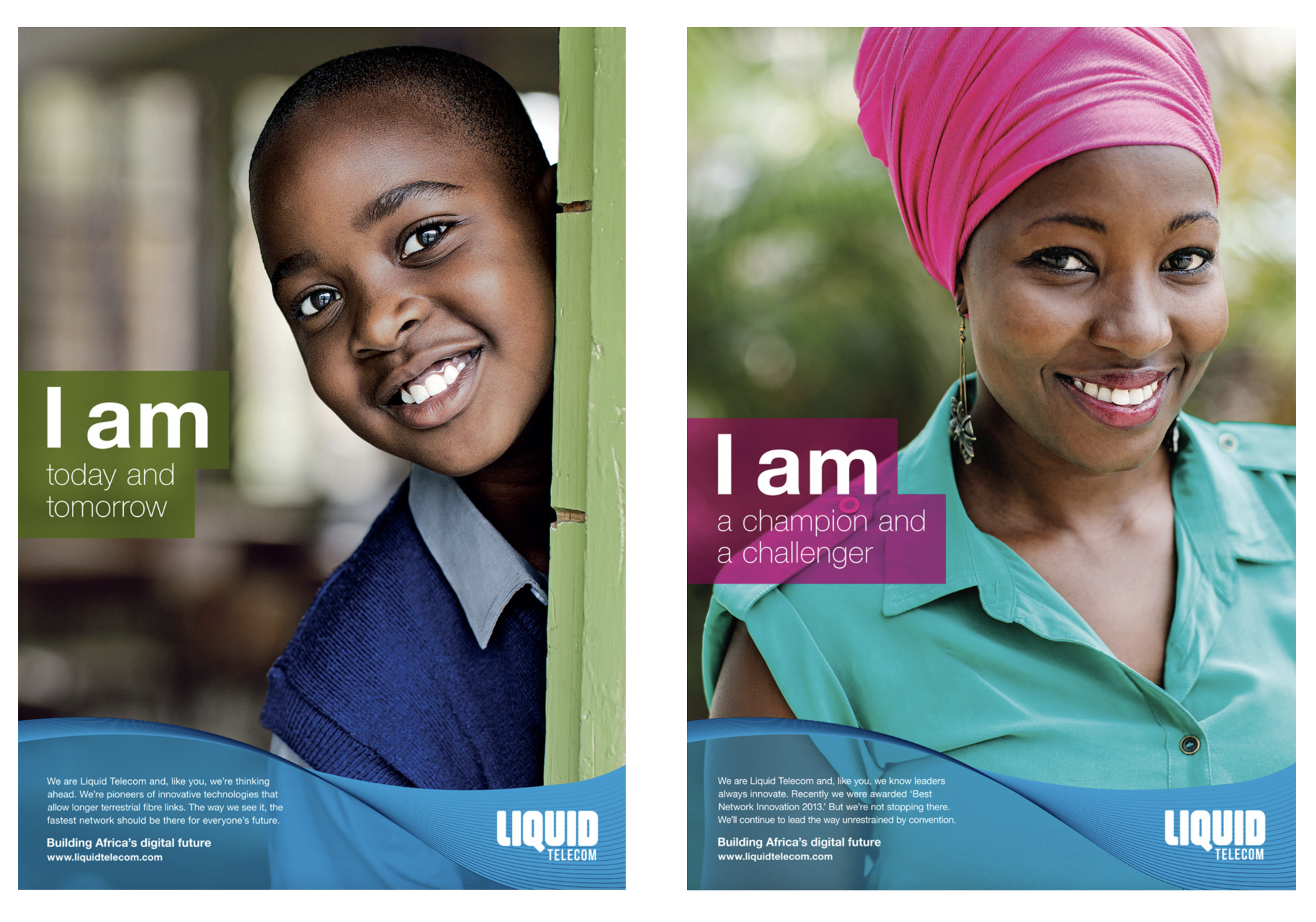
At Liquid Telecom, I led a campaign to communicate the value of their infrastructure in Africa, focusing on how it empowers communities through connectivity. Rather than bogging down the message with technical jargon (and in telecoms acronyms are everywhere) we crafted the "I AM" campaign, using relatable statements like “I AM Progress” and “I AM Future.” These simple yet powerful brand messages humanised Liquid Telecom’s technology and showed how it makes a tangible difference in people’s lives. The creative use of minimal text (who reads the body-copy anyway?) and strong imagery made the complex pan-African infrastructure technology feel personal and relevant to consumers and businesses alike, helping to solidify the re-branded company across key African markets.

Bringing Cybersecurity to Life: The PCCW Global Campaign

And at PCCW Global their cybersecurity products focused on breaking down the complexities of advanced threat detection and protection. The campaign avoided technical jargon and instead used relatable visuals and storytelling to demonstrate how cybersecurity solutions safeguard businesses in a digital world.

Showing real-life scenarios of businesses under threat and how PCCW Global’s technology provides a seamless layer of protection we were able to communicate the importance of cybersecurity in a clear human-centred way.

This is why I believe that creativity is a powerful strategic tool in the B2B technology sector, where simplifying complex products and communicating their real-world impact can make all the difference in customer engagement and financial performance.

My experience with Arq, Liquid Telecom, and PCCW Global demonstrates that crafting relatable stories, using human-centred messaging, and extraordinary visuals can lead to stronger brand positioning and better business outcomes.

Even in a sector where engineering, operations and technical prowess often overshadow marketing resources, creativity bridges the gap. By focusing on the customer experience and making technology accessible, businesses can not only differentiate themselves but also unlock significant financial gains.

References
McKinsey, 2023. Creativity’s Role in Business Growth: A New Era of Innovation.
Cannes Lions Creativity Report, 2023. How Creative Excellence Drives Business Value.
System1 Research, 2023. Emotion and Creativity in Advertising: The Path to Profitability.
Forrester Research, 2022. B2B Companies Using Creativity See Higher Market Share and Retention Rates.

Creativity LINKS TO Financial Performance - Expect unfiltered ideas formed without corporate oversight or focus groups, so they are personal and proudly imperfect.

Is Personalisation at Scale The Future of B2B Marketing?

As businesses increasingly navigate a crowded digital space, B2B marketing has evolved far beyond the traditional tactics of cold emails and broad messaging. In 2024, it's no longer just about getting your product in front of potential buyers, it's about creating personalised experiences that address specific pain points and add value from the first interaction.

Why Personalisation Matters in B2B

We often think of personalisation as a B2C tool, but the B2B landscape is equally ripe for tailored experiences. The more personalised the interaction, the higher the likelihood of meaningful engagement.

According to research by ActiveCampaign (Giving B2B Buyers the B2C Experience They Want), at least 80% of B2B buyers expect the same level of personalisation and care they receive in B2C interactions, so B2B marketersneed to shift their focus and provide a more customer-centric experience. This demand for personalisation includes offering customised content, recommendations, and experiences across the buying journey to help buyers feel understood and valued​. B2C and B2B are merging.

An Adobe study (B2B Commerce Growth Strategies) reveals biggest B2B priorities and challenges for 2023)also highlights that B2B sellers are increasingly focusing on personalising their ecommerce strategies, with tactics such as currated search results, product recommendations, and targeted promotions playing a key role in driving conversions​.

This growing expectation for personalisation reflects the shift in B2B towards more consumer-like experiences. It’s becoming more and more important for marketers to understand and use marketing automation tools to meet these demands.

The New Frontier: Scale

However, the challenge for many marketers lies in achieving personalisation at scale. It’s one thing to tailor content for a handful of clients, but how do you personalise for hundreds—or even thousands—without losing the human touch? The key lies in blending cutting-edge technology with the most important factor, creative storytelling.

  1. AI and Predictive Analytics: AI tools can now analyse vast amounts of data to predict what content will resonate with specific buyer personas. This helps in delivering the right message, to the right person, at the right time.

  2. Dynamic Content and Automation: Leveraging dynamic content and marketing automation tools allows us to serve personalised messages based on user behavior, demographics, and engagement history. This can transform a generic outreach into a conversation that feels one-on-one.

  3. Account-Based Marketing (ABM): ABM continues to grow as a vital strategy in B2B, and when combined with data-driven personalisation, it can create a tailored experience for entire accounts, not just individuals. It’s about meeting your customers where they are and addressing their specific business needs.

A Shift from Product-Centric to Solution-Oriented Messaging

Many B2B marketers are still guilty of product-first messaging. In today’s environment, it’s time to pivot to solution-oriented marketing, what problems do we solve?. Buyers don’t want to hear about your product features—they want to know how your product solves their unique problems. Building narratives around case studies, real-life applications, and ROI-driven content will make a world of difference.

Humanise the Data

Despite all the technological advances, B2B marketing should never lose its human element. Data can tell us the ‘what’ and ‘when,’ but it’s the human insight that informs the ‘why’ and ‘how.’ The future of personalisation lies in marrying data with empathy, creating content that doesn’t just speak to prospects, but resonates with them on a deeper level. I’ve said it before and I’ll say it again, anyone can do the quant analysis, but in marketing its always the qualitative elements that will make the difference.

What are your thoughts on personalisation in B2B marketing? How are you using technology to create more meaningful customer experiences?

#B2BMarketing #Personalisation #ABM #MarketingStrategy #ThoughtLeadership #AIinMarketing #CustomerExperience

Is Personalisation at Scale The Future of B2B Marketing? - Expect unfiltered ideas formed without corporate oversight or focus groups, so they are personal and proudly imperfect.

Brand Tactics In The Trump Harris Debate

Every politician has a brand

Last night’s debate between Donald Trump and Kamala Harris offers a clear example of political branding at work and how both candidates used their own, very stylised brand tactics rooted in the fast-moving consumer goods (FMCG) sector.

Trump’s Shock Tactics:

Donald Trump's approach was typical Trump and very on message (for trump) which was to use shocking and controversial marketing. How else can we explain Trump’s claim that "in Springfield, they're eating the dogs... and the cats... they're eating the pets of the people that live there,"; a statement that was fact-checked and found to be false in real-time.

This sensationalism is reminiscent of PETA or Benneton, who frequently used graphic and provocative content to force public attention on animal rights issues or simply to get our attention. For the most part it worked because shocks stir emotions, Trump’s claims are designed to incite fear and outrage, particularly around immigration.

Like Trump, brands like Axe (Lynx) and GoDaddy have built their identity on shocking or controversial advertisements that (like Trump) alienate some audiences while deeply resonating with their target market. Trump’s political brand follows the same path—prioritising emotional impact over factual accuracy, with the intention of mobilising his core supporters.

While Trump’s claims will get immediate attention, they also risk his credibility with fact-checking and rebuttals. But does he care? Of course not – the jobs done as soon as the idea leaves his mouth. Brands using shock tactics will face criticism for misleading or offensive ads, but they also succeed in capturing attention and starting conversations. For Trump, this tactic is tried and trusted—engaging his loyal base at the potential expense of undecided voters.

Harris’s Trust and Credibility

In contrast, Kamala Harris’s strategy is grounded in building trust and credibility, like brands that sell quality and reliability.

She addressed her role in handling immigration and law enforcement saybing, "I’m the only person on this stage who has prosecuted transnational criminal organisations for the trafficking of guns, drugs, and human beings", positioning herself as the experienced prosecutor, highlighting her credibility on national security issues. By emphasising her qualifications and past successes, Harris’s brand is aiming herself as the stable, trustworthy and knowledgeable leader, much like brands that focus on credibility and proven expertise, such as Colgate, Volvo, Dove or Toyota. Her brand is about reassurance, telling voters that she has the experience to handle complex issues, aiming to build a sense of reliability and confidence.

Brand Harris pushes towards the centre ground that Trump likes to run away from. She distanced herself from extreme positions; “Tim Walz and I are both gun owners. We're not taking anybody's guns away. So stop with the continuous lying about this stuff.”

The Harris brand is about credibility, inclusivity, and long-term reliability. By clarifying her stance on gun ownership, Harris reassures voters that she is aligned with moderate, centrist views, expanding her appeal without alienating too much of her core Democratic base. Harris’s goal is to create a solid foundation of trust with moderate voters by presenting herself as a balanced leader with a clear plan for the future, designed to win over centrist voters while maintaining her progressive base.

Comparing Political Branding to Commercial Strategies

Much like in the world of FMCG, political candidates tailor their strategies to different audience segments. Trump’s shock-and-awe approach mirrors brands which push the boundaries of what is considered acceptable or tasteful in order to dominate the conversation. These brands, like Trump’s campaign, thrive on attention—even if it means risking controversy or backlash.

Harris, on the other hand emphasise trust, ethics, and consistency in their messaging. By positioning herself as a reliable and thoughtful candidate, Harris aims to build long-term credibility with voters who are looking for stability and pragmatic leadership. But does she have enough time for this to work?

Summary

The 2024 debate between Trump and Harris offers a masterclass in how political figures adopt FMCG marketing tactics to reach voters. Trump’s use of shocking claims aligns with brands that rely on controversy to spark engagement, while Harris’s credibility-based messaging echoes the strategies of trusted, long-standing brands.

Whether through shock tactics or trust-building, both candidates are shaping their political brands to resonate with distinct voter segments, much like FMCG brands craft their identities to appeal to different consumer markets. And they are very different markets.

Brand Tactics In The Trump Harris Debate - Expect unfiltered ideas formed without corporate oversight or focus groups, so they are personal and proudly imperfect.

Start-ups - prioritise momentum

Now, don’t get me wrong I’m a great believer in corporate purpose and I understand the importance of setting out the guiding principles as a ‘NorthStar’ for any ambitious company. But having been involved in several early-stage start-ups, I now believe that momentum is every bit and sometimes more important than purpose.

If you haven’t yet defined a corporate purpose, let me try to explain some of the elements that I think should be prioritised, to ensure communications don’t stall at the first hurdle.

A corporate purpose is very important in bringing ideas and concepts together has many benefits, especially in attracting the right talent, aligning culture with values, and generally becomes more relevant as the company begins to scale and mature. The very best purpose statements take time, creativity, multiple iterations, and a great deal of thought. If it’s not there yet, don’t let that slow you down – build momentum in your communications and keep going.

In the early stages of a company's growth (often whilst still fundraising) my belief is that the marketing narrative should not be stifled because the corporate purpose hasn’t yet been nailed down.

Communicate the company’s origin story, its vision for the future and how it intends to get their (its mission), the key stakeholders, and some demonstration of a proof of concept. These stories haven’t yet been heard and will be more critical, in the early stages, than having a fully articulated corporate purpose statement - and here’s why.

Origin Story - The origin story is compelling because it connects emotionally with listeners, whether they are potential investors, customers, or partners. It tells why the founders started the company and the problem they are passionate about solving. This story can significantly influence engagement and support, as it makes the business relatable and the mission personal. In time, this will inform the purpose statement, but it can easily be communicated sooner and has all the credibility of the purpose statement baked in.

Vision and Mission - The vision and mission statements define the company's long-term goals. In early stages, these align the team and provide a clear direction that guides all strategic decisions and communications. They help stakeholders understand where the company aims to go and how it intends to get there, which is more important at this stage than a carefully crafted purpose statement.

Key Stakeholders - When fundraising, highlighting key stakeholders — including founders, key employees, and initial investors — helps to establish credibility above and beyond a purpose statement. Senior leaders and respected stakeholders often bring with them a track record of success, skills, and networks that can reassure potential investors and partners of the company’s potential. The expertise and reputation of these individuals can be a strong endorsement of a start-up’s viability.

Proof of Concept - Perhaps most importantly, having a proof of concept demonstrates that the start-up’s idea is viable and has the potential for success. This can be a prototype, a pilot project, or initial sales figures that confirm market interest and potential profitability. It’s critical for potential investors and partners to see tangible evidence that the concept works, that it has the potential to bring in revenues and that it meets a real need in the market.

While a corporate purpose statement is valuable in the early stages, it may not be as critical as the elements listed above. During initial growth and fundraising, the immediate concern is often about proving the business model, securing capital, and building a customer base.

A purpose statement is more about long-term brand identity and corporate responsibility, which, although important, can (and often is) refined as the company evolves.

For early-stage companies, the immediate goal is often survival and proving the business model, which means attracting the necessary support and resources to ensure ongoing operations and growth. As such, the elements that directly support these objectives—origin story, vision and mission, key stakeholders, and proof of concept—tend to take precedence.

Start-ups - prioritise momentum - Expect unfiltered ideas formed without corporate oversight or focus groups, so they are personal and proudly imperfect.