The Great Inversion for Carriers
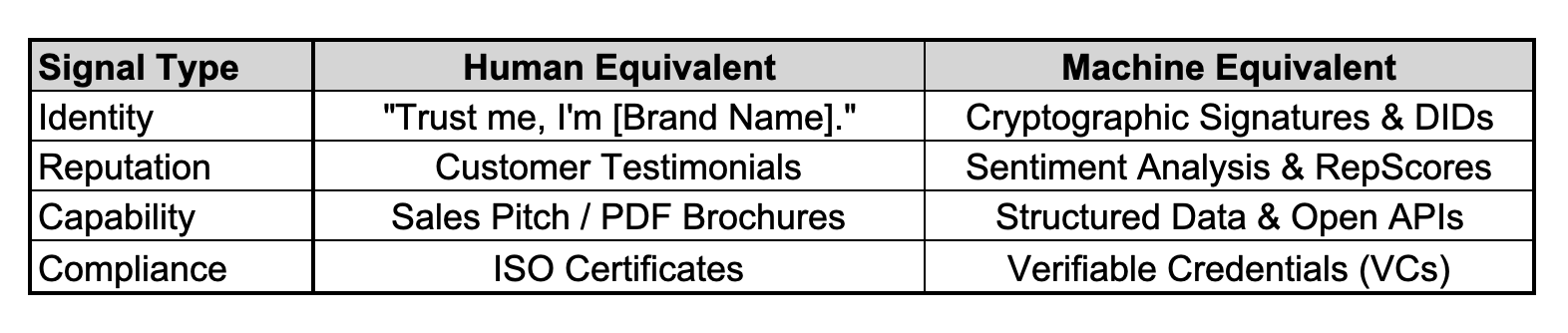
In a market increasingly mediated by AI agents (autonomously negotiating SLAs, routing workloads, or vetting supplier credibility), brand trust becomes protocol-level currency. The brand that AI systems learn to rely on for clean data, stable APIs, and transparent governance is the one that wil win out. Successful carriers and infrastructure providers will shift from showing maps to demonstrating metrics of uptime transparency, carbon usage, data sovereignty compliance, and verifiable AI governance.
Trust becomes the storytelling vehicle that turns invisible assurance into tangible value.
Are we witnessing a structural metamorphosis in global telecommunications? It feels less like a gradual evolution and more like a total inversion of power. This is when brand and marketing can really step in!
As we enter the agentic AI era businesses require continuous control, reliability, and verifiable governance. In a world of black-box algorithms and shadow AI, the brand that can prove it is a "trusted source", one that is credible, consistent, and compliant is the one that AI systems will recommend and regulators will favour.
Just a decade ago, the international carrier community sat at the head of the table, controlling a clear majority of the world’s used international capacity. Today, that share has shrunk to a minority position. Hyperscalers and content providers now dominate many major routes and command a substantial share of global internet traffic.

Feedback from the conversations at PTC’26 in Honolulu last week, is that the mood wasn't one of defeat; it was one of rebranding. Are we moving beyond an era of heavily negotiated, product-centric deals towards what Harry Beckwith would have called “Selling The Invisible” where network is assumed and service and reporting is everything?
For years, telcos led with maps and ownership diagrams (which worked brilliantly for us at Gateway Communicatios in the early days, and I see Liquid Telecom hstill haven’t moved on from their love of maps). Meanwhile, hyperscalers led with assurance. They position connectivity as a property of the platform, not the other way round.
Carriers are starting to take a page from that playbook, moving away from a simplistic "carrier-versus-cloud" tension and into an era of realy deep infrastructure integration. Carriers are now positioning their physical real estate, central offices and exchange points, as the "AI grids" of the future. By becoming distributed AI processing nodes, carriers can solve the hyperscalers' most pressing problems of power constraints and latency at the edge.
This synergy is arguably most visible in subsea resilience. While hyperscalers invest billions in private backbones like the recent signals around AWS Fastnet, they still interconnect deeply with carrier infrastructure, where the carrier acts as a local "trust bridge," providing the regulated infrastructure and compliance that hyperscalers need to meet strict residency requirements.
Enterprises today treat global connectivity as a default condition and they care much less about cable landing stations and infrastructure. Now they care about “Assurance-as-a-Service”.
The investment community is watching to see which carriers can pivot from being "plumbers" to being "orchestrators". Fibre is still the foundation but the real value is shifting to the intelligence and automation layers sitting on top of it. In this new world order, brand and narrative matter almost as much as the backbone. Trust is the only currency that truly scales.